How to Check if Your Haldi Is Pure: Simple Home Tests from FSSAI
By Bikaner Spices · 28 September 2026 · 5 min read
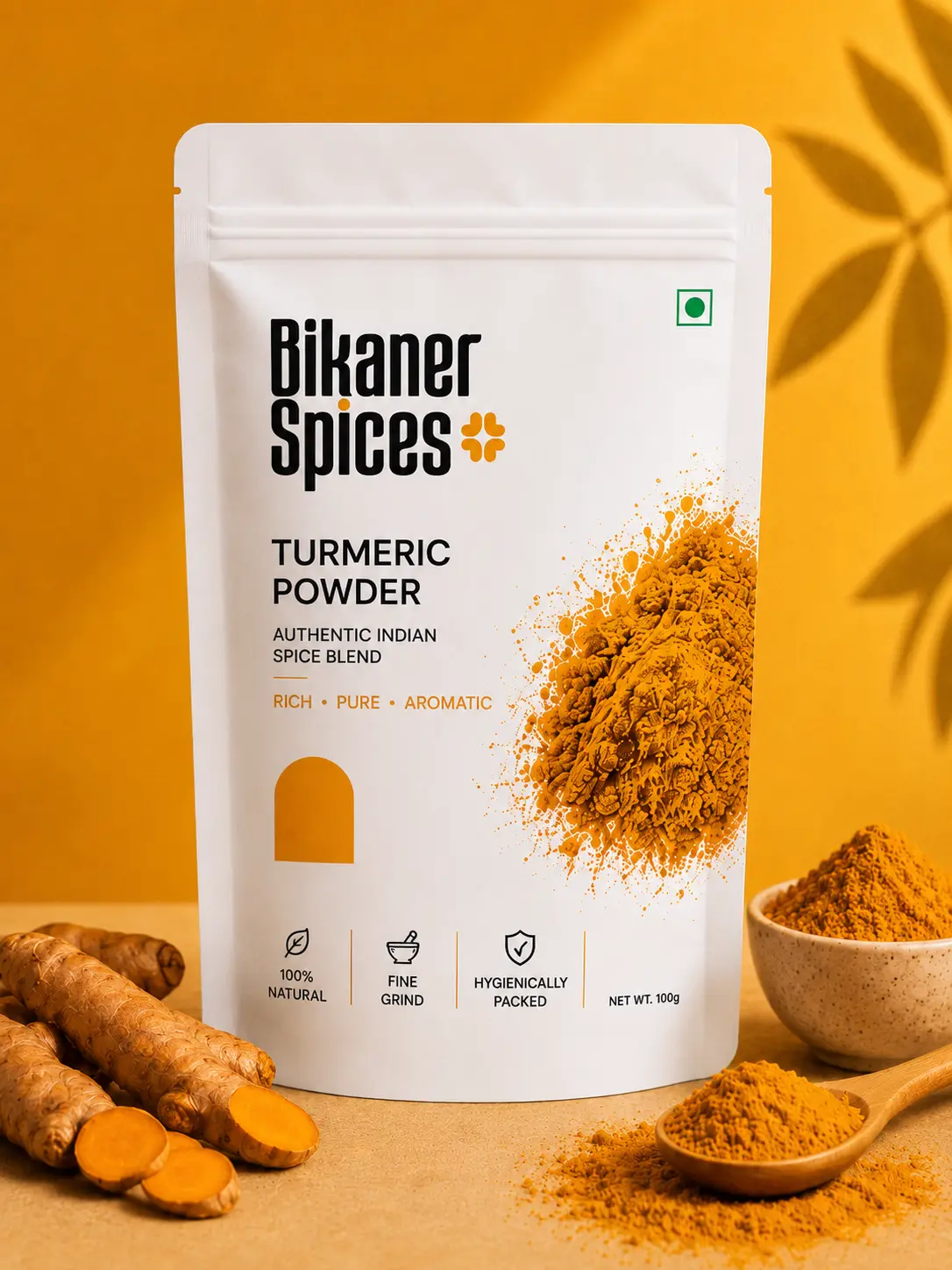
Ground spices are among the foods most often adulterated in India. Artificial colour can make haldi (turmeric) look brighter, brick powder can bulk up lal mirch (red chilli), and sawdust or husk can be mixed into powders like dhaniya (coriander).
The good news: India's food regulator, FSSAI, publishes simple tests anyone can do at home in its guide DART (Detect Adulteration with Rapid Test). The three below need nothing but a clear glass of water.
1. Haldi (turmeric powder): check for added colour
The water test
- Add a teaspoon of turmeric powder to a glass of water. Do not stir.
- Watch it for a minute as it settles.
Natural haldi leaves a light yellow colour in the water while it settles. Adulterated haldi leaves a strong yellow colour, a sign of added colour.
2. Lal mirch (red chilli powder): check for colour and brick powder
Two quick checks
Added colour: sprinkle chilli powder onto the surface of water in a glass. If red colour immediately starts running down in streaks, artificial colour has been added.
Brick powder or sand: add a teaspoon of chilli powder to a glass of water and let it settle. Take a little of the residue from the bottom and rub it between your fingers. A gritty feel suggests brick powder or sand.
3. Dhaniya (coriander powder) and other ground spices: check for sawdust
The float test
- Sprinkle the powdered spice onto the surface of water in a glass.
Pure spice does not leave sawdust or powdered bran on the surface. If you see sawdust or bran floating, the spice has been adulterated.
What these tests can and can't tell you
- They are quick screening checks for common adulterants, not a laboratory analysis.
- A spice can pass them and still have other problems, and results can be hard to read with very fine powders.
- If you are worried about a product, stop using it, keep the pack, and report it to the brand or to FSSAI. Accredited food-testing laboratories can test samples properly.
What to look for when you buy
- A sealed, labelled pack from a brand you can contact, rather than loose powder of unknown origin.
- An FSSAI licence number, batch number, packed date and best-before date printed on the pack.
- A natural, even colour: very bright, unusually vivid powder is worth a closer look.
Our spices come in sealed, labelled packs with the batch number, packed date, MRP and best-before details printed on every one. Try these tests with any spice in your kitchen, and tell us if you have questions about ours.
Shop: Turmeric Powder (Haldi) · Red Chilli Powder (Lal Mirch) · Coriander Powder (Dhaniya)
Source: tests adapted from FSSAI's Detect Adulteration with Rapid Test (DART) guidance for consumers (eatrightindia.gov.in/dart). Home tests are indicative only and are not a substitute for laboratory testing.